Serving Pittsburg, CA and surrounding areas. (925) 318-8318
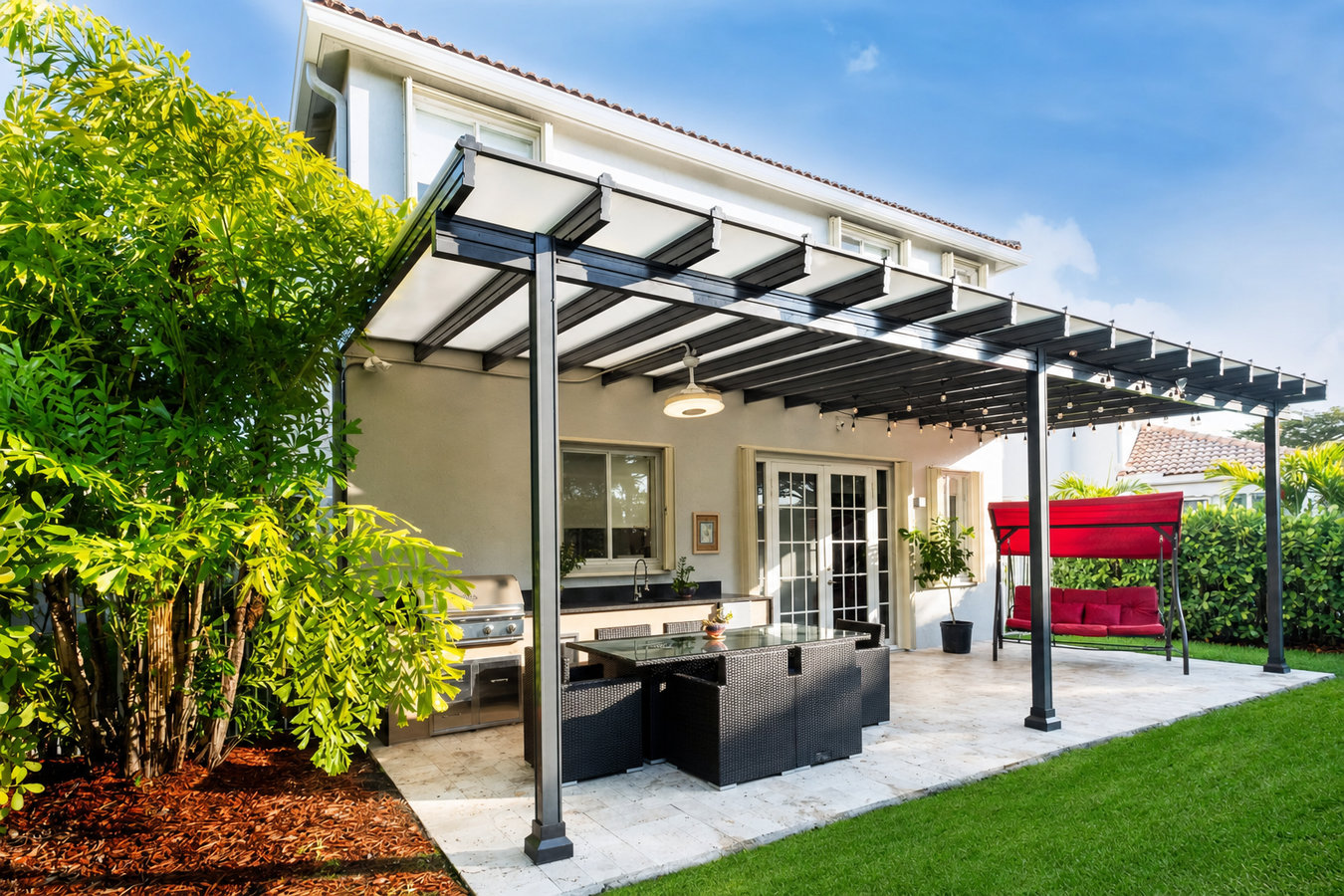
Custom Pittsburg Deck & Fence builds covered decks, composite outdoor structures, pergolas, and fences for Pleasant Hill homeowners, including the ranch and split-level homes that make up most of this city. We have served Contra Costa County since 2016 and handle permitting, footing work, and construction from the first call to final inspection.
Pleasant Hill summers push above 90 degrees regularly, making shade the top priority for anyone who actually wants to use their outdoor space from June through September. Our covered deck and patio cover installations are designed for the Diablo Valley heat load and are built to attach cleanly to the ranch and split-level rooflines common throughout Pleasant Hill.
Most Pleasant Hill homes are single-story ranch or split-level builds on modest lots with concrete slabs. We design decks that transition naturally from the existing slab or backdoor level, fit the yard dimensions, and hold up to the expansion-and-contraction cycle that Contra Costa clay soils drive every year.
In Pleasant Hill's hot, dry summers, composite decking outperforms wood by resisting the UV exposure and temperature swings that crack and warp natural boards. Homeowners who commute via the Pleasant Hill BART station and are away during the day particularly benefit from composite's lower maintenance demands.
A pergola gives Pleasant Hill backyards structured shade without the full roofing cost of a covered deck, and it works especially well in yards with mature trees that already provide partial cover. We set posts in concrete footings deep enough for Pleasant Hill's clay soil movement.
Homes built between 1950 and 1985 make up most of Pleasant Hill, and decks from that era are often running out of serviceable life. We assess the framing honestly and tell you whether board replacement and post repairs extend the structure or whether full replacement is the smarter financial decision.
Many Pleasant Hill neighborhoods have wood fences that have been working through Contra Costa's clay-soil movement for decades. We replace failing sections or install new fences with post-set concrete footings sized for the soil conditions here, so panels do not lean or shift after the first wet season.
Pleasant Hill was incorporated in 1961, and the bulk of its residential neighborhoods were built during the 1950s through 1980s. That puts most homes in the city between 40 and 70 years old - an age range where original concrete flatwork, deck framing, and fence posts are reaching or past their expected lifespan. Ranch-style and split-level homes dominate the housing stock, typically built on concrete slabs or raised foundations, with stucco exteriors and attached garages. A contractor who knows this construction era understands what to expect when the slab is opened or the old deck framing is exposed.
The climate adds its own stress cycle to every outdoor structure in Pleasant Hill. The Diablo Valley location means summer temperatures regularly climb into the 90s - hot enough to accelerate the breakdown of unsealed wood, caulking, and roofing materials. Then the rainy season arrives, and the clay soil that runs through most of Contra Costa County swells with moisture before shrinking again over the following summer. That annual expansion and contraction is what cracks driveways, heaves patios, and shifts fence posts over time. Footing depth and concrete mix selection matter more here than in areas with stable sandy soils.
Our crew works throughout Pleasant Hill regularly, and we understand the local conditions that affect deck building and fence work here. We pull permits through the City of Pleasant Hill Building Division and are familiar with the plan check requirements for standard residential decks and patio covers. For current permit information, the City of Pleasant Hill website covers building and planning department services.
Pleasant Hill covers a range of property types that each require a different approach. The neighborhoods closest to Diablo Valley College tend to have the oldest housing stock, with the ranch-style homes from the 1950s and 60s that are characteristic of the city's earliest residential development. Streets closer to the Walnut Creek border have more recently built homes with slightly different framing conventions. Properties near Contra Costa Boulevard have a mix of residential and commercial uses that can affect how permits are reviewed and what setback requirements apply. Across the city, mature trees in yards - some growing for 50 or 60 years - mean root intrusion into concrete and drainage is a routine consideration on any ground-level project.
We also serve the communities around Pleasant Hill. If you are in Walnut Creek to the south or in Concord to the north, our crew covers all of central Contra Costa County and responds to new inquiries within one business day.
Reach us by phone or through the contact form and describe what you have in mind. We respond to every Pleasant Hill inquiry within one business day to confirm availability and set up the on-site visit.
We visit your Pleasant Hill property, assess the site conditions - including soil type, existing concrete, and any root or drainage concerns - and give you a detailed written estimate. You are not committed to anything until you sign the contract, and the estimate covers all materials, labor, and permit fees.
Once you approve the estimate, we submit the permit application to the City of Pleasant Hill Building Division and schedule construction around the expected approval window. Most Pleasant Hill residential permits review in one to three weeks.
Most Pleasant Hill deck and patio cover projects take one to three weeks of active construction. We manage the final city inspection and give you a walkthrough of the completed work before we leave the site.
We serve Pleasant Hill and all of central Contra Costa County. Free estimates, permits handled, no pressure.
Pleasant Hill is a city of about 34,000 people in Contra Costa County, situated in the Diablo Valley between Walnut Creek, Concord, and Martinez. The city was incorporated in 1961, and most of its residential neighborhoods were developed between the 1950s and the 1980s - a postwar growth era that produced the ranch-style and split-level homes that still define Pleasant Hill's residential character. The city is home to Diablo Valley College, one of the oldest and largest community colleges in Contra Costa County, and has its own BART station at the Contra Costa Centre transit village. Contra Costa Boulevard serves as the main commercial corridor, with neighborhoods spreading out from it into quieter residential streets.
The housing stock in Pleasant Hill skews toward single-family detached homes, with homeownership rates consistently above 60 percent. Many residents have owned their homes for a decade or more, which means deferred maintenance is common and outdoor structures built in the 1970s or 80s are frequently due for assessment or replacement. The city's tree-lined streets - with oaks, eucalyptus, and other large species that have been growing for 40 to 60 years - add character to the neighborhoods but also mean root pressure into concrete and drainage is a routine factor on outdoor projects. Neighboring Martinez to the northwest and Concord to the north share similar housing stock and climate conditions, and we serve all three areas.
Low-maintenance composite decking that looks great for decades.
Learn MoreAffordable pressure-treated wood decks built to last outdoors.
Learn MoreProtect and refresh your deck with professional staining and sealing.
Learn MoreClassic wood fencing for privacy, security, and curb appeal.
Learn MoreEnjoy your outdoor space without bugs with screened enclosures.
Learn MoreStay comfortable outdoors year-round with a covered deck or patio.
Learn MoreCall us today or submit a request online. We respond within one business day and serve all of Pleasant Hill and central Contra Costa County.